
What Does “Link in Bio” Mean? A Complete Guide to How It Drives Social Media Traffic in 2026
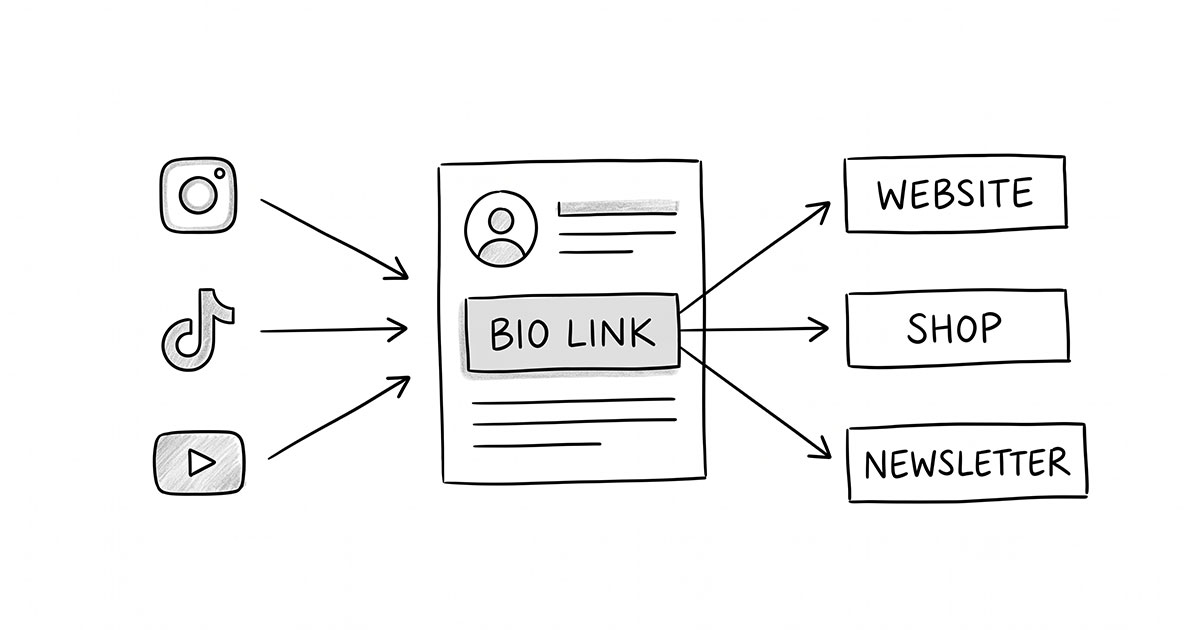
Link in bio refers to a clickable URL placed in a social media profile that directs users to external websites, landing pages, or online stores. It has become a core mechanism in platforms like Instagram, TikTok, and YouTube for routing traffic outside the platform ecosystem. This guide explains what ‘link in bio’ means, why social platforms centralize outbound traffic, and how it functions as a key conversion bridge between attention and action in the creator economy.
If you’ve spent any time on social media, you’ve probably seen captions like “link in bio” or “new drop in bio.”
So what does “link in bio” mean?
A “link in bio” is a clickable URL placed in a social media profile that directs users to external destinations such as a website, product page, or landing page.
In simple terms, it is the main way creators and brands send social media traffic outside of platforms like Instagram, TikTok, and YouTube.
But the concept is more important than it looks.This simple feature actually plays a critical role in how modern platforms control outbound traffic.
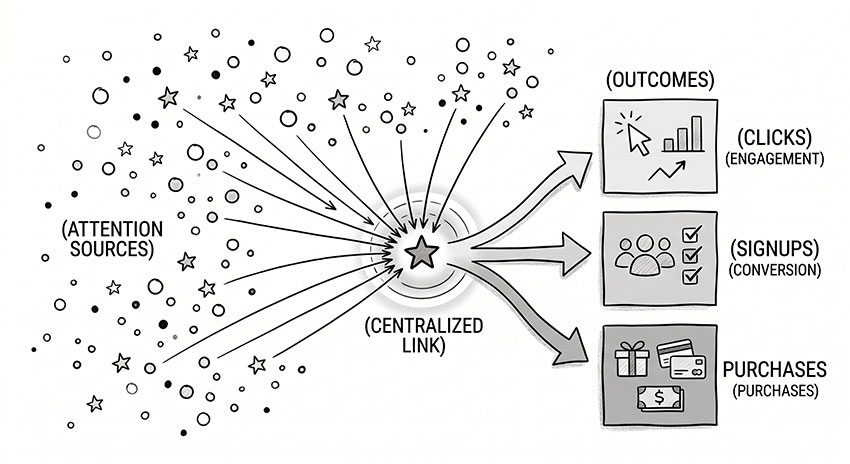
In today’s creator economy, the link in bio has become the primary bridge between attention and action—turning views into clicks, and clicks into conversions.
Whether you are a casual user trying to understand what it means, or a creator building an audience, understanding how link in bio works helps you navigate social media more effectively and avoid confusion when interacting with external links.
In this guide, we’ll break down exactly what does “link in bio” mean, why it exists, and how it shapes modern social media traffic in 2026.
What Does “Link in Bio” Actually Mean?
A “link in bio” is a clickable URL placed in the biography section of a social media profile that directs users to external websites or landing pages.
Most social media platforms do not allow clickable links inside posts, so users are instructed to visit the profile page to access the link instead.
This link can lead to different types of destinations, such as:
• A personal website
• An online store
• A product or campaign landing page
• A newsletter signup page
• A multi-link hub page (link-in-bio tool)
In simple terms, when someone says “link in bio,” they are asking users to visit their profile and click the available link to continue to the intended content.
Why Do People Use “Link in Bio” Instead of Direct Links?
Social media platforms like Instagram, TikTok, and YouTube do not allow consistent clickable links inside posts.
Instead, they intentionally centralize outbound traffic through the profile bio.
This reflects a structural limitation in how social platforms are designed.it is part of how social platforms manage user retention, content distribution, and external traffic flow.
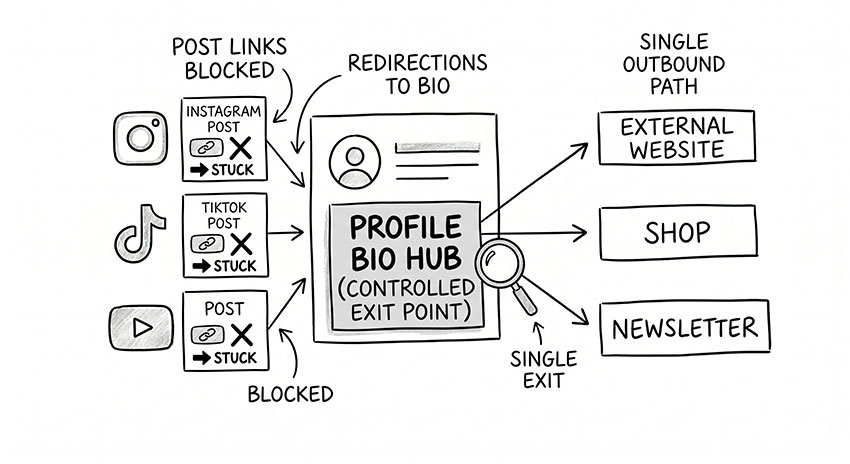
Most platforms limit direct linking in posts because:
• They want users to stay within the platform ecosystem longer
• They reduce spam, phishing, and low-quality outbound traffic
• They maintain control over how users exit the platform
According to platform design documentation and creator economy reports, most social platforms prioritize on-platform engagement, which naturally limits external linking inside post content.
As a result, the profile bio becomes the most reliable and consistent location for external links.
This creates a single, standardized “exit point” for social media traffic.
In practice, the link in bio acts as a controlled gateway between attention and external action—turning platform engagement into measurable clicks, visits, or conversions.
For creators and businesses, this makes the bio link not just a convenience feature, but a core part of their traffic distribution strategy.
What Happens When You Click a Link in Bio?
Many users hesitate before clicking a “link in bio” because the destination is not always visible upfront.
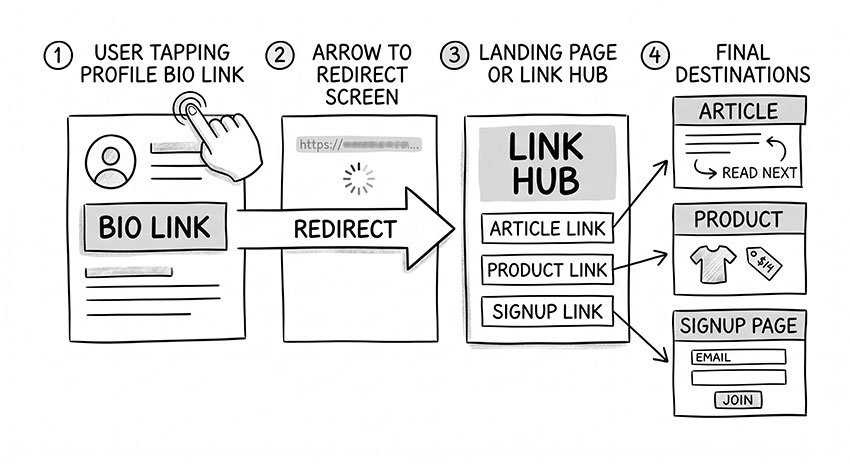
In most cases, clicking a bio link follows a simple process:
- You tap the link in a social media profile
- You are redirected to an external website
- You arrive at either a landing page or a content hub
The destination varies depending on the creator or brand. It may lead to:
• A blog post or article
• A product or service page
• A checkout or payment page
• A multi-link landing page that organizes multiple resources
From a technical perspective, a link in bio is simply a redirection layer between social media platforms and external websites.
Is it safe to click a link in bio?
In general, link in bio pages are widely used by creators, brands, and businesses across major social platforms and are typically safe to access.
However, safety depends on the credibility of the source rather than the mechanism itself.
A simple way to evaluate risk is:
• Established creators or verified brands → generally safe to browse
• Unknown accounts → review the profile and context before engaging
• Suspicious or misleading pages → avoid entering personal or sensitive information
Like any external link on the internet, the key factor is not the “link in bio” itself, but who is sharing it and where it leads.
The key takeaway
A “link in bio” is not a standalone platform. It is a routing mechanism that connects social media attention to external destinations in a controlled way.
Why “Link in Bio” Became So Important
The importance of “link in bio” comes from a fundamental shift in how social media platforms distribute and control traffic.
Social media platforms are designed to maximize on-platform engagement, which means most content is optimized for views, not external clicks.
As a result, creators often face a structural limitation:
There is no consistent way to move audience attention from content to external actions.
Without a centralized link in the bio, creators would struggle to:
• Direct traffic from social platforms to external websites
• Convert passive viewers into active users or customers
• Build long-term owned audiences such as email lists or subscribers
This is where the link in bio becomes essential.This behavior has become standard across the creator economy, especially as short-form video platforms continue to dominate content distribution and reduce external link visibility inside posts.
It functions as a unified control point for outbound attention, allowing creators to structure how users move from content consumption to external engagement.
In practice, this creates a simple but powerful conversion flow:
• Views become clicks
• Clicks become subscribers or leads
• Subscribers become customers or long-term audiences
This is why the link in bio is no longer treated as a passive profile feature. For creators, brands, and businesses, it has become a core part of their traffic and conversion infrastructure.
How Link in Bio Works on Different Platforms
Although the “link in bio” concept is consistent across platforms, its implementation varies depending on how each platform structures content distribution and outbound traffic.
In all cases, the bio link serves the same core function: it acts as the primary controlled entry point for directing users from social content to external destinations.
However, each platform integrates it differently based on user behavior and content format.
Instagram provides a dedicated website field in user profiles, and some accounts also support multiple links.
Since posts do not support clickable links, the profile bio becomes the primary and most reliable traffic exit point.
This makes Instagram one of the most “bio-link dependent” platforms in the social ecosystem.
TikTok
TikTok allows website links for eligible accounts, particularly business profiles.
Because TikTok content is driven by rapid discovery and high-volume distribution, the bio link often captures high-intent “momentum traffic” from viral content.
In other words, users move quickly from content consumption to external action, making the bio link a key conversion checkpoint.
YouTube
YouTube allows creators to place links in channel descriptions and profile sections.
These links are typically used to direct viewers from long-form content to external resources such as websites, courses, or landing pages.
Because YouTube content has longer viewing cycles, bio links often support deeper intent traffic rather than immediate clicks.
Facebook supports website links in both profile fields and business page CTA buttons.
Compared to other platforms, Facebook provides more flexible linking options, allowing both direct outbound traffic and structured call-to-action flows.
The common pattern across all platforms
Despite differences in implementation, all platforms share one underlying principle:
The link in bio exists because social media platforms prioritize on-platform engagement while still providing a controlled pathway for external traffic.
This makes the bio link a universal “exit layer” across social ecosystems, regardless of platform differences.
Common Types of Link in Bio Pages
Link in bio pages are not all the same. They differ mainly in how they structure user attention and guide traffic toward specific actions.
Instead of being defined by the tools used to build them, they are better understood by how they organize links and conversion paths.
There are generally three common structures.
Comparison of Link in Bio Page Types
| Type | Purpose | Best For | Conversion Level |
|---|---|---|---|
| Simple link list | Basic navigation | Beginners / casual users | Low |
| Branded landing page | Identity + presentation | Creators / personal brands | Medium |
| Conversion funnel page | Drive actions (sales, signups) | Businesses / marketers | High |
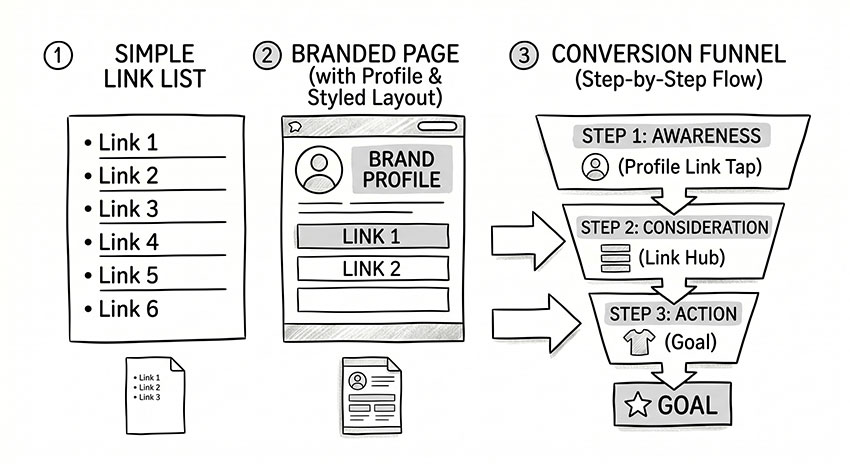
Simple link list pages
These are the most basic type of link in bio pages.
They present multiple links in a simple stacked format without much design or hierarchy.
This structure is often used by beginners or creators who only need to direct traffic to a few destinations without focusing heavily on optimization.
Branded landing pages
These pages focus more on visual identity and user experience.
They combine links with branding elements such as profile images, color systems, and short descriptions.
This structure is commonly used by personal brands, influencers, and businesses that want to maintain consistency between social presence and external websites.
Conversion-focused funnel pages
These are optimized for action.
Instead of simply listing links, they prioritize specific goals such as signups, purchases, or lead generation.
They often guide users through a clear hierarchy of actions, making them more effective for monetization and marketing campaigns.
The key insight
The effectiveness of a link in bio page depends less on the tool used to build it and more on how the page structures attention and conversion flow.
In other words, structure determines performance, not platform choice.
How to Make a Link in Bio More Effective
A high-performing link in bio page is not about increasing the number of links. It is about reducing friction and guiding user attention toward a clear conversion path.
Because social media traffic is highly intent-driven and short-lived, users typically make click decisions within seconds. This means structure and clarity have a direct impact on conversion performance.
Focus on one primary conversion goal
Every link in bio page should have a clear priority action.
Whether it is a product purchase, newsletter signup, or content download, the most important action should be visually and structurally prioritized above secondary options.
This helps reduce decision uncertainty and increases the likelihood of a click.
Reduce choice overload
When users are presented with too many equal options, they are less likely to take action.
Most effective link in bio pages limit visible choices to a small number of high-value actions, typically between three and five.
This creates a focused attention path instead of fragmented decision-making.
Use action-oriented language
CTA wording plays a direct role in click behavior.
Generic labels like “Learn More” do not communicate value clearly.
Stronger CTAs describe the outcome of the action, such as:
• Download Free Guide
• Get Early Access
• Join Newsletter
This reduces cognitive effort and improves engagement rates.
Match the user’s intent from content
Link in bio performance improves significantly when the destination aligns with the content that brought the user there.
For example, if a user clicks after viewing a specific post, the first visible link should reflect that topic or intent.
This continuity between content and destination increases trust and click-through rates.
The underlying principle
An effective link in bio page is not a list of links. It is a structured conversion system designed to transform social media attention into measurable action.
This is why even small changes in structure can significantly impact click-through rates.
FAQs About “Link in Bio”
What does “link in bio” mean on Instagram?
A “link in bio” on Instagram refers to the clickable URL placed in a user’s profile that directs followers to external websites, landing pages, or other online content.
Since Instagram does not allow clickable links inside post captions, the bio link becomes the main way creators and brands send traffic outside the platform.
Is every link in bio a landing page?
Most link in bio destinations lead to landing pages, but not all of them are designed the same way.
Some simply redirect to a single website, while others act as structured hubs that organize multiple links, content, or conversion paths.
This is why the experience after clicking a bio link can vary significantly depending on how the page is built.
Why do influencers say “link in bio” instead of posting links?
Most social media platforms limit or disable clickable links in post captions to reduce spam and keep users within the platform.
As a result, influencers direct users to their profile bio, where a single or multiple external links can be accessed more reliably.
This makes “link in bio” a standard call-to-action across platforms like Instagram, TikTok, and YouTube.
Can you add multiple links in bio?
Yes. Many platforms now allow multiple links directly, or creators use link-in-bio tools to build a single page that organizes multiple destinations.
This allows users to group different resources such as websites, products, and social channels into one accessible location.
Do I need a link in bio if I’m not a creator?
Even if you are not a creator, a link in bio can still be useful depending on how you use social media.
For example, it can be used to share a personal website, portfolio, resume, or any external content you want others to access easily.
However, for casual users who only consume content, a link in bio is optional and not required.
Final Thoughts on “Link in Bio”
A “link in bio” is not just a profile feature—it is a structural mechanism that reveals how modern social platforms manage attention flow and external traffic routing.
Across platforms like Instagram, TikTok, and YouTube, it consistently functions as the controlled boundary between content consumption and external action, where engagement is converted into measurable outcomes.
This pattern is not accidental. It reflects a broader system design where platforms optimize for on-platform attention while centralizing all outbound traffic through a single entry point.
Understanding what does “link in bio” mean is therefore not just about knowing a definition—it is about recognizing a recurring infrastructure pattern that shapes how social media ecosystems operate.
Once you see it this way, “link in bio” stops being a simple instruction and becomes a visible signal of how attention is structured, distributed, and converted across the internet.